
By The Same Token: Barclays advances tokenized deposits, stablecoin plan
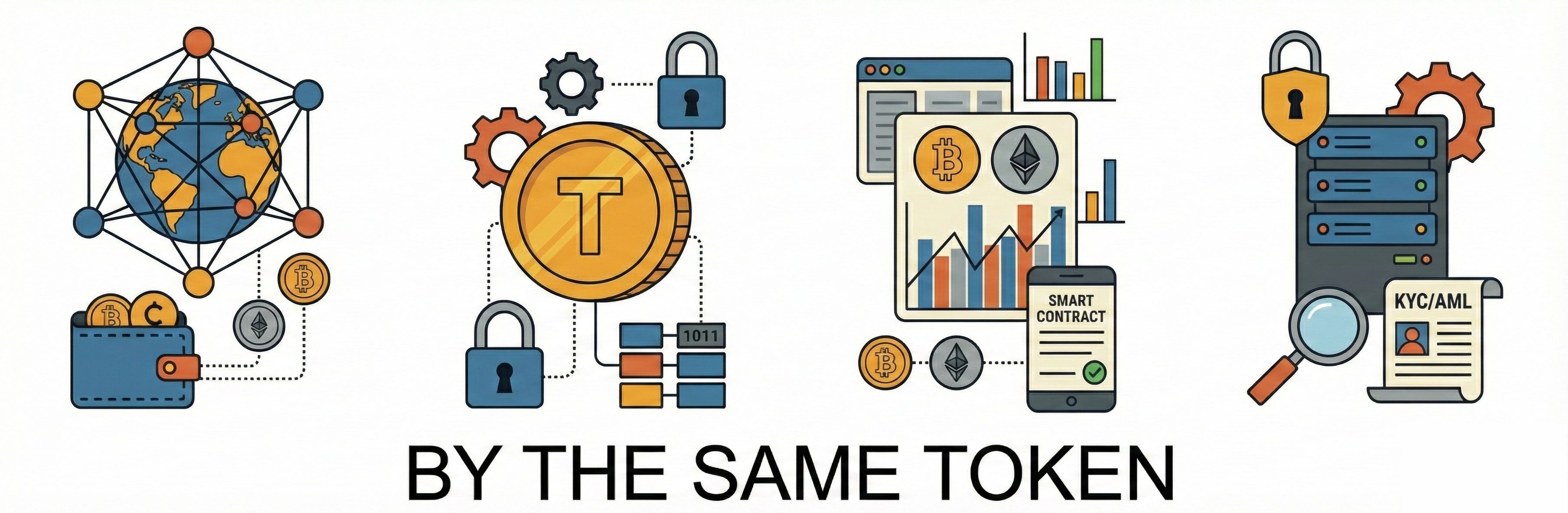
The Situation
Barclays has circulated an RFI to technology suppliers for a blockchain platform that can support stablecoin payments and tokenized deposits, with a vendor selection target as soon as April, per a Bloomberg-sourced cluster picked up by CoinDesk, Finextra, and Ledger Insights. Mechanically, this is Barclays moving from “monitor/pilot” posture toward procurement + build, i.e., committing budget and architecture decisions.
The timing matters because the competitive set is no longer theoretical: JPMorgan’s deposit-token and wholesale rails, Citi’s token services framing, and the European consortium momentum on bank-issued digital money are pulling activity out of labs and into payments + deposits core plumbing.
The delta versus our last two editions is the emphasis shift: we’ve been tracking tokenized MMF shares as a cash-like wrapper (WisdomTree) and stablecoin growth as a front-end Treasury bid (Treasury bills). Barclays is now explicitly targeting the middle layer—the bank deposit itself—as the programmable settlement asset.
The Mechanism
- Two instruments, two balance sheets:
Tokenized deposits keep value as a commercial bank liability (inside the deposit regime). A bank stablecoin is typically a tokenized claim structured to circulate more broadly—but the regulatory perimeter and redemption mechanics differ. Barclays exploring both suggests it’s testing where regulators will allow “moneyness” to travel. - RFI = architecture choice point: Vendor selection drives whether Barclays builds on a permissioned ledger (bank/consortium-grade) vs a public network with institutional controls, and whether tokens are issuer-controlled (transfer restrictions, whitelists) or designed for interoperability with external venues.
- Primary use-case is settlement compression, not retail crypto: Expect initial focus on intra-group treasury, wholesale payments, and DvP/PvP-style settlement where Barclays can control counterparties and compliance. Tokenized deposits are especially suited to “closed loop” wholesale settlement with known participants.
- Counterparties that matter are other banks + FMIs + large corporates: The platform’s value rises if it connects into (i) other bank tokenized deposit schemes, (ii) tokenized collateral (MMF shares, T-bills), and (iii) post-trade utilities. Otherwise it’s just a faster internal ledger.
- Second-order effect: deposit mobility becomes a strategic risk variable: If tokenized deposits are made portable across venues, banks have to manage intraday deposit flows more like wholesale funding—tightening the link between payment rails design and liquidity management.
- Stablecoin angle is about external reach: A Barclays-issued stablecoin (if pursued) is likely aimed at cross-border and programmable payment corridors where non-bank wallets or non-Barclays counterparties need to hold the instrument—pushing harder into regulatory approvals and distribution.
The State of Play
Market Position
Barclays is effectively joining the “build vs partner” race for wholesale digital money infrastructure. The key question is whether it’s positioning for a bank-led closed network (tokenized deposits for settlement among permissioned participants) or a bridge asset that can interact with tokenized RWAs and external platforms. In practice, the procurement path suggests Barclays wants an engine that can do both: start in a constrained perimeter (deposits) and keep an option on broader circulation (stablecoin), depending on what counterparties demand.
This also tees up a convergence with tokenized collateral. If tokenized MMF shares (like WisdomTree’s now-cleared 24/7 transferability) become acceptable “cash legs” in more workflows, banks will want a native bank-money token to settle against them—reducing reliance on third-party stablecoins for institutional settlement.
Regulatory Landscape
In the UK/EU context, the tokenized deposit route is generally the lower-friction starting point because it stays closer to familiar banking constructs (deposit liability, KYC’d holders, controlled transfer). A stablecoin product pushes Barclays into the sharper edge of issuance authorization, reserve requirements, redemption guarantees, and distribution controls—particularly if the token is intended to circulate outside a tight institutional perimeter.
The near-term constraint is not “is DLT allowed,” but what form of digital money regulators will treat as equivalent to deposits for settlement finality and consumer/institutional protection—and how that interacts with existing payments regulation and safeguarding regimes.
Key Data
- Vendor decision window: Barclays aims to choose suppliers as soon as April 2026 (per the Bloomberg-sourced reports summarized by Ledger Insights and Finextra).
- European stablecoin footprint remains tiny: Non-USD stablecoins (EUR/GBP/CHF) are still <0.2% of global stablecoin market cap, about $586m (via Markets Media). This is the distribution gap Barclays is implicitly underwriting if it wants a GBP/EUR-facing product.
- Bank issuance trendline: Eight global banks had launched their own stablecoins by December 2025 (same Markets Media dataset), with a 12-bank European consortium also referenced—raising the odds that interoperability, not standalone issuance, becomes the deciding feature.
- DLT fixed income issuance: Global DLT fixed income issuance is cited as up 48% (per Markets Media), reinforcing that tokenized “assets” are scaling faster than tokenized “bank money” in Europe—creating settlement demand.
What’s Next
The immediate catalyst is Barclays’ vendor selection and design choice: whether it prioritizes (1) a tokenized deposit rail optimized for permissioned wholesale settlement, (2) a stablecoin rail optimized for broader distribution, or (3) an architecture that can map both instruments onto one ledger and compliance stack. Watch for signals in April around network model (consortium vs single-bank), interoperability commitments (links to other bank rails/FMIs), and whether Barclays frames the project as “payments modernization” or explicitly as tokenized settlement for RWAs**—that wording will tell you which flows they’re courting first.
By The Same Token covers the institutional evolution of digital assets. For questions or tips: reply to this email.
🌐 Visit whatsthelatest.ai for the latest Digital Assets coverage and more.
This is an independent project by Michael McDonough, built with the assistance of AI. Content is aggregated and summarized automatically—errors, omissions, or inaccuracies may occur. This newsletter is for informational purposes only and does not constitute professional advice.