
By The Same Token: Mastercard buys BVNK for $1.8B
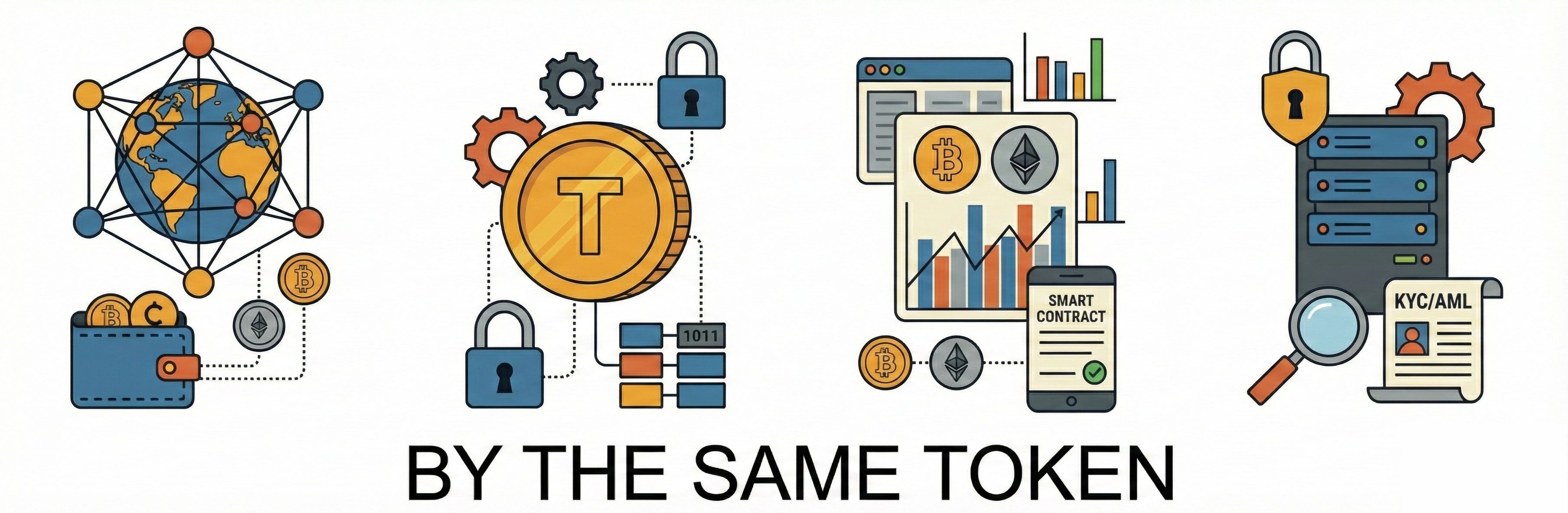
The Situation
Mastercard agreed to acquire BVNK for ~$1.8B, pulling a high-throughput stablecoin orchestration layer directly inside the card network’s commercial payments stack (MSN; also summarized in the cluster analysis: Lex). The non-obvious point is where this sits in the value chain: BVNK isn’t “a stablecoin” or “a wallet”—it’s the middleware that routes, converts, and reconciles stablecoin flows across rails and counterparties.
This reads less like a crypto product expansion and more like Mastercard buying settlement plumbing to defend (and re-price) high-friction B2B flows as they migrate on-chain. If Flow Traders’ 24/7 tokenized OTC launch (3/21 edition) was the tell that secondary liquidity is now institution-grade, Mastercard’s move is the tell that payments incumbents now want to own the cash leg—especially when that cash leg is a stablecoin.
The Mechanism
- Mastercard internalizes the “stablecoin ops desk”: BVNK’s core value is orchestration—on/off-ramps, FX, treasury ops, compliance hooks, and multi-chain routing—the stuff that determines whether stablecoin settlement is cheaper in practice, not just in theory. Owning it lets Mastercard productize stablecoin settlement as a network service rather than a partner dependency.
- Counterparty graph expands from banks to issuers + liquidity providers: To run stablecoin flows at scale, Mastercard needs reliable access to stablecoin issuers (mint/redeem), banking partners (fiat legs), and liquidity (FX + stablecoin liquidity). BVNK effectively becomes the control plane that chooses which counterparties clear each leg.
- Commercial flows are the prize, not retail checkout: The strategic battleground is cross-border B2B, treasury, marketplaces, and payouts—the segments with the highest friction and weakest incumbent economics. That’s consistent with the PYMNTS framing that stablecoins stall on “coordination” and operational barriers, not ideology (PYMNTS).
- Stablecoins become a default settlement lubricant for tokenized assets: As we noted in the Flow Traders edition, tokenized exposures increasingly settle against fiat/stablecoin rails. Mastercard buying BVNK is a direct bet that the settlement asset for tokenized funds/MMFs/private credit flows will often be stablecoins (or stablecoin-like bank liabilities), even if the underlying is TradFi.
- Permissioning and compliance move up-stack: Mastercard’s brand and bank relationships force a gated, compliant model—KYC’d wallets, sanctioned-address screening, travel-rule-aligned data, and auditable controls. BVNK’s orchestration layer is how you enforce those rules without relying on each merchant or platform to engineer them.
- Second-order effect: pricing power shifts to whoever owns “routing + reconciliation”: If stablecoin rails commoditize raw transfer, the durable margin sits in FX, liquidity aggregation, dispute/returns logic, reconciliation, and reporting—i.e., the “network services” wrapper. Mastercard just bought that wrapper.
The State of Play
Market Position
Visa/Stripe/Mastercard are converging on the same conclusion: stablecoins won’t “replace” card networks; they’ll unbundle parts of the payments stack (settlement, treasury, cross-border) and force incumbents to compete on orchestration and distribution. Mastercard’s acquisition is the most explicit acknowledgment yet that the winning position is to be the router of record across fiat accounts, stablecoin balances, and (increasingly) tokenized collateral.
In practical market-structure terms, BVNK gives Mastercard an asset it previously lacked: a way to standardize stablecoin settlement workflows across multiple chains/issuers while presenting enterprises a familiar enterprise contract, SLA, and compliance perimeter. That matters because most large corporates don’t want “a wallet strategy”—they want one throat to choke for payments ops.
Regulatory Landscape
This deal also anticipates a regime where stablecoin usage is permitted—but only if the operator can demonstrate controls, supervision-ready reporting, and clear responsibility across the flow. The regulatory bottleneck is not “can a token move”; it’s who is accountable for AML/sanctions, consumer/commercial protections, and operational resiliency when value moves across hybrid rails.
Mastercard buying BVNK looks like a pre-emptive alignment with where guidance is heading: regulators will tolerate stablecoins deeper in the stack if the regulated interface (the network/PSP) can enforce policy consistently. In other words: stablecoins may be open networks, but institutional adoption will be mediated through permissioned distribution and supervised operators.
Key Data
- Deal size: ~$1.8B purchase price for BVNK (MSN).
- Implied throughput: BVNK cited as handling roughly $30B in volume (per the lead cluster analysis: Lex).
- Addressable flow Mastercard is defending: Mastercard network volume is $9T+ (as referenced in the same analysis cluster: Lex)—the relevant question is what % of commercial flows can migrate to stablecoin settlement.
- Adoption constraint (structure, not sentiment): Stablecoin scaling remains gated by coordination + operational integration more than “belief,” per PYMNTS’ barrier analysis (PYMNTS).
What’s Next
The immediate catalyst is whether Mastercard re-bundles BVNK into a named enterprise product (think: stablecoin-enabled cross-border settlement, marketplace payouts, and treasury management) with explicit issuer coverage (which stablecoins), chain coverage (which networks), and bank partner connectivity (which on/off-ramps)—and, crucially, whether it offers DvP-style settlement hooks for tokenized RWAs. Watch for: (1) initial corridors (US-LATAM/US-Asia), (2) disclosed issuer partnerships (mint/redeem guarantees), and (3) integration into existing Mastercard commercial platforms where the distribution is already there and the switching costs are real.
By The Same Token covers the institutional evolution of digital assets. For questions or tips: reply to this email.
🌐 Visit whatsthelatest.ai for the latest Digital Assets coverage and more.
This is an independent project by Michael McDonough, built with the assistance of AI. Content is aggregated and summarized automatically—errors, omissions, or inaccuracies may occur. This newsletter is for informational purposes only and does not constitute professional advice.