
By The Same Token: OpenEden tokenizes BNY high-yield bonds
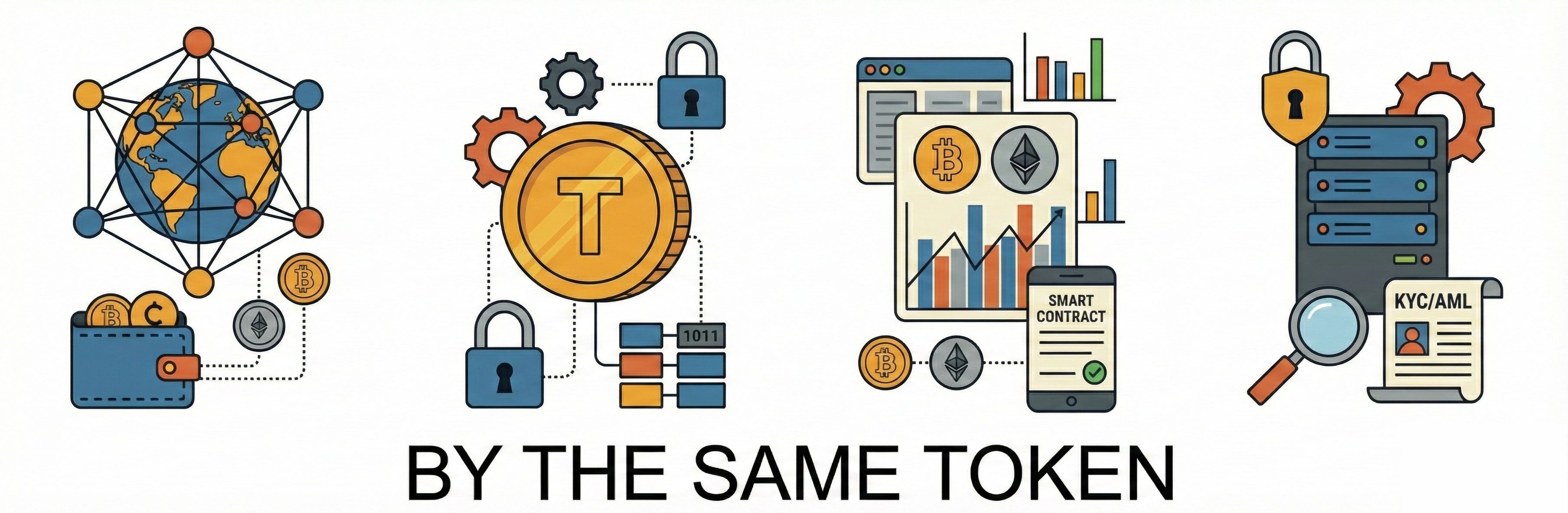
The Situation
OpenEden has launched HYBOND, a tokenized product that gives qualified investors 1:1 exposure to BNY Investments’ Global Short-Dated High-Yield Bond strategy, moving beyond the “tokenized T-bills only” phase of on-chain fixed income (CoinDesk, The Block). Mechanically, this is not a bond being re-issued on-chain; it’s tokenized access to a professionally managed, short-duration HY portfolio under a major institutional brand.
The delta is the counterparty and product risk profile: tokenization is now being used to distribute credit risk (and manager selection), not just “cash-like” sovereign exposure. That’s a meaningful step toward tokenization as a distribution and servicing layer for active strategies—not merely a settlement experiment for government bills.
The Mechanism
- Wrapper, not native issuance: HYBOND appears structured as a token that tracks an off-chain managed strategy (BNY Investments as portfolio manager), with OpenEden operating the on-chain issuance/redemption and investor-facing rails. The portfolio stays in conventional market plumbing; the claim is what’s digitized.
- Qualified-investor gating is the product feature: OpenEden is leaning into eligibility controls (KYC/AML + transfer restrictions) to keep the instrument in an institutional perimeter—critical for high-yield exposure where suitability and disclosure expectations are tighter than for T-bills.
- Credit becomes “on-chain eligible collateral” (second-order): Once a HY exposure can be held as a token with predictable transfer logic, the next question from allocators is whether it can be re-pledged in regulated settings (prime, margin, structured lending) with haircuts that reflect HY risk. That’s where the real flow impact sits.
- Short duration is doing risk management work: “Global short-dated HY” is a deliberate design choice: it reduces rate duration and can tighten liquidity management versus long-duration HY—important if the token design offers more frequent subscriptions/redemptions than the underlying cash bonds comfortably support.
- BNY brand as distribution lubricant: The “BNY Investments” label matters less for marketing and more for operational comfort: investors can map this exposure onto existing due diligence frameworks (manager oversight, valuation, compliance), then treat the token as a new holding/settlement format.
- Strategic implication for tokenization platforms: If tokenization platforms can list managed credit sleeves (not just Treasuries/MMFs), they start competing with traditional fund platforms on access, minimums, and operational portability—even if they’re not yet competing on retail distribution.
The State of Play
Market Position
Tokenized Treasuries proved that investors will hold on-chain claims when the asset is simple, liquid, and easy to explain. HYBOND is the next stress test: active credit + liquidity/valuation nuance. If it scales, it signals that tokenization’s near-term wedge is not “rebuilding bond markets on-chain,” but repackaging existing institutional strategies into programmable, portable instruments that can move across venues, wallets, and (eventually) credit workflows.
This also intersects with what we flagged in recent editions about the market’s pivot toward regulated perimeters and controllable counterparties: the winners in tokenized credit will be the stacks that can offer clean transfer controls, attestation, and custody integrations—because HY exposure raises the bar on who can hold it, how it’s valued, and what happens in stressed liquidity.
Regulatory Landscape
A tokenized HY strategy sits in a more sensitive zone than tokenized bills: it is economically closer to a securities/fund-like interest than to a cash management instrument. That pushes issuers toward explicit investor qualification, tight secondary transfer rules, and conservative marketing. The practical regulatory question for institutions won’t be “is this on a blockchain?” but what is the legal nature of the claim, who is the issuer, and how are custody/segregation and redemption rights structured under the relevant offering exemptions and local regimes (OpenEden is described as Bermuda-regulated in coverage).
Key Data
- Product: HYBOND — tokenized exposure to BNY Investments’ Global Short-Dated High-Yield Bond strategy (CoinDesk, The Block).
- Investor scope: Qualified investors (explicit gating).
- Exposure type: 1:1 claim on a managed portfolio of short-dated high-yield corporate bonds (strategy sleeve, not single CUSIPs).
- Institutional counterparty: BNY Investments as the investment manager (BNY unit).
What’s Next
The immediate catalyst is whether OpenEden can secure repeatable distribution (allocators willing to treat HYBOND as a standard credit sleeve) and demonstrate operational coherence under stress: NAV timing, redemption mechanics, and transfer restrictions that don’t break when liquidity in underlying HY markets thins. Watch for follow-on signals in two places: (1) whether HYBOND gets integrated into institutional custody/portfolio reporting stacks as a first-class security, and (2) whether it’s permitted—formally or informally—to function as collateral in on-chain or hybrid credit arrangements with clearly defined haircuts.
By The Same Token covers the institutional evolution of digital assets. For questions or tips: reply to this email.
🌐 Visit whatsthelatest.ai for the latest Digital Assets coverage and more.
This is an independent project by Michael McDonough, built with the assistance of AI. Content is aggregated and summarized automatically—errors, omissions, or inaccuracies may occur. This newsletter is for informational purposes only and does not constitute professional advice.