
By The Same Token: PrimeDelta launches compliant L1, stablecoin
The Situation
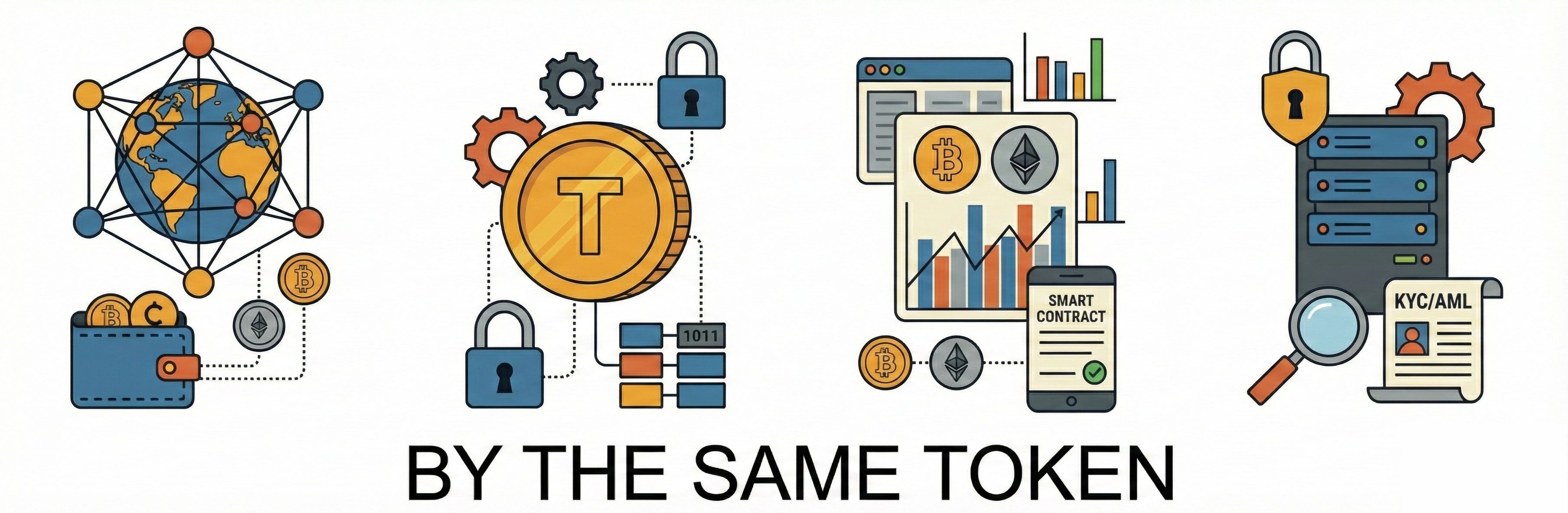
PrimeDelta says it will launch a “fully compliant” proprietary Layer-1 blockchain alongside a native DEL token and a USD stablecoin, dUSD, positioned explicitly for tokenization of securities and real-world assets (ACCESS Newswire, syndication via The State). The notable move here isn’t “another L1.” It’s the attempt to bundle issuance rails + settlement asset + compliance wrapper into a single stack targeted at regulated instruments.
This lands as banks are converging on the same design pattern from the opposite direction: Morgan Stanley is pulling custody into an OCC-supervised perimeter (our 3/1 edition), while Barclays is procuring tokenized deposit / stablecoin infrastructure (2/28). PrimeDelta is effectively pitching a third path: a purpose-built chain that claims to be compliant by design, rather than retrofitting controls onto a general-purpose public network or a bank-led permissioned ledger.
The delta to watch is whether “compliant L1” translates into named counterparties (banks, broker-dealers, transfer agents, ATSs) and explicit legal structure (issuer, reserve custodian, redemption terms)—or remains press-release compliance.
The Mechanism
- Vertical integration pitch: PrimeDelta is packaging (i) an execution/issuance environment (its L1), (ii) an incentive/fee token (DEL), and (iii) a settlement leg (dUSD). If it works, it reduces reliance on third-party stablecoins and external chains for RWA settlement.
- Compliance-by-architecture vs compliance-by-intermediary: A “compliant L1” typically implies permissioning, whitelists, transfer restrictions, audit logs, and administrative controls. That can help issuers meet securities-transfer constraints—but it also reduces composability and open liquidity.
- Stablecoin as the cash leg: dUSD is positioned as “fully backed.” The practical question is where the reserves sit (bank custodian? money market instruments? Treasuries?) and whether redemption is T+0/T+1, 24/7, and onshore—the real determinants of institutional usability.
- Securities tokenization needs post-trade hookups: Tokenizing “securities and RWAs” requires more than a ledger: cap table/admin, corporate actions, transfer agency, KYC/AML, and—critically—secondary market venues with permitted participants (ATS/MTF equivalents). Without those integrations, the chain is an issuance island.
- Counterparty gravity problem: New L1s don’t win on tech; they win on distribution. PrimeDelta will need anchor issuers (private credit, funds, structured products), a reserve/custody partner for dUSD, and at least one regulated venue or broker-dealer path to secondary trading.
- Second-order effect if it succeeds: A compliant L1 + house stablecoin can create closed-loop DvP for private securities (subscriptions/redemptions, repo-like financing, fund share transfers) with tighter control than public networks—competing more with permissioned consortia than with DeFi.
The State of Play
Market Position
PrimeDelta is entering a crowded “institutional chain” field where differentiation is less about throughput and more about who will vouch for the stack. Bank-led efforts (deposit tokens, tokenized deposits, and custody perimeters) are pulling regulated flows toward entities with existing balance sheets and compliance programs. PrimeDelta’s wedge is to offer a turnkey alternative to institutions that want on-chain issuance/settlement without waiting for a bank consortium’s onboarding timelines.
But the market has matured: buyers now ask for proof of reserves, bankruptcy remoteness, control frameworks, and venue connectivity before they route meaningful notional. In practice, “compliant L1” is credible only when it ships with named legal entities, service providers, and operating rules that match how securities actually move.
Regulatory Landscape
PrimeDelta’s framing leans heavily on “compliance,” but the press materials (so far) don’t answer the regulator-facing questions that matter: Is dUSD issued by a regulated entity? What is the redemption covenant? What is the reserve composition and custody arrangement? For securities tokenization, the compliance hinge is not the chain—it’s the off-chain legal wrapper (issuer/agent/venue) and whether transfers are constrained to eligible holders under applicable exemptions and market structure rules.
This announcement also sits in a U.S. environment where market-structure legislation remains in motion; that uncertainty increases the premium on conservative design: clear disclosures, segregation of customer assets, and clean auditability—especially if PrimeDelta wants to serve broker-dealers, funds, or bank-affiliated programs.
Key Data
- Products announced: Proprietary Layer-1, DEL native token, and dUSD “fully backed” stablecoin (ACCESS Newswire).
- Target asset class: “Securities and real world assets” (explicitly positioned for tokenization) (The State).
- Unspecified (critical gaps to diligence): Reserve composition/custodian for dUSD; issuance entity and licensing status; chain permissioning model; identity/KYC framework; transfer restriction tooling; secondary venue partnerships.
What’s Next
The near-term catalyst is whether PrimeDelta converts “compliant” messaging into verifiable plumbing: a named reserve custodian + attestation cadence for dUSD, explicit redemption mechanics, and at least one regulated distribution path (broker-dealer/ATS/transfer agent stack) for tokenized securities. Until those counterparties are disclosed, institutional allocators should treat this as an early-stage infrastructure pitch—not yet a settlement rail competing with bank deposit tokens or established tokenized cash products.
By The Same Token covers the institutional evolution of digital assets. For questions or tips: reply to this email.
🌐 Visit whatsthelatest.ai for the latest Digital Assets coverage and more.
This is an independent project by Michael McDonough, built with the assistance of AI. Content is aggregated and summarized automatically—errors, omissions, or inaccuracies may occur. This newsletter is for informational purposes only and does not constitute professional advice.