
By The Same Token: SEC panel backs tokenized securities roadmap
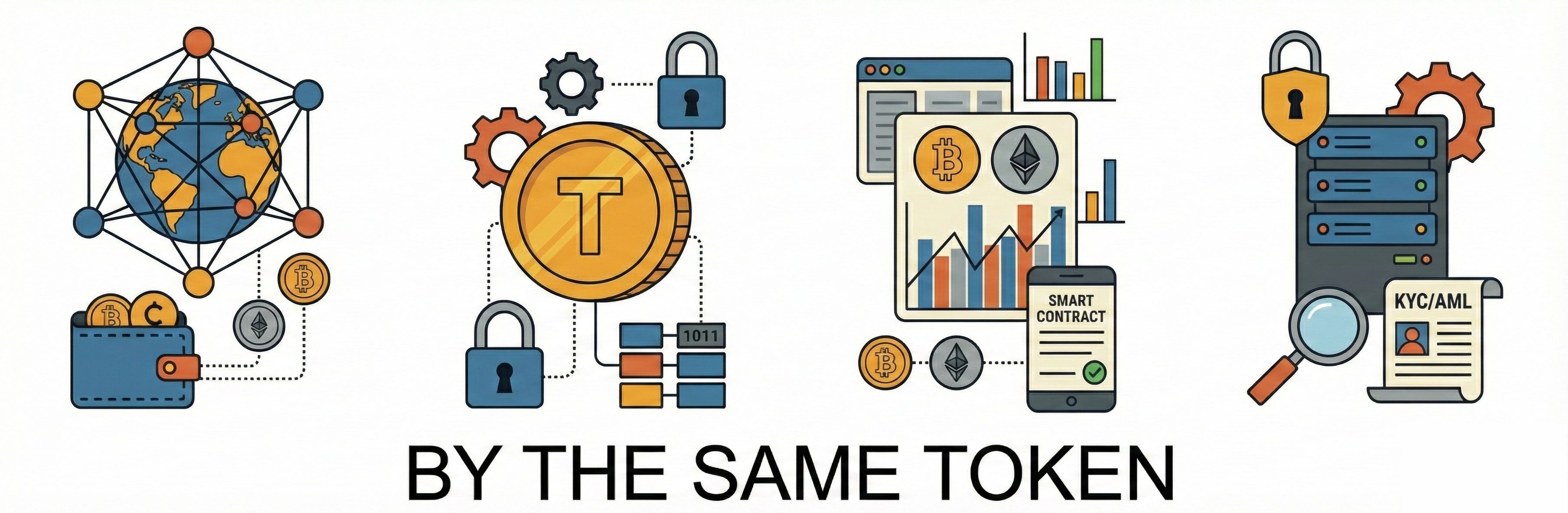
The Situation
The SEC’s Investor Advisory Committee voted to recommend the agency advance a tokenized securities roadmap, explicitly urging the SEC to use narrow, time-bound exemptive relief to let regulated market participants run tokenized equity/securities pilots without breaking core investor-protection rules, per CoinDesk. Separately, reporting out of the same meeting quotes SEC Chair Paul Atkins signaling the Commission could consider an “innovative exemption” for equity tokenization in the near term, per Bit-get’s write-up (secondary source).
The delta versus the SEC’s prior posture isn’t rhetorical support for tokenization—it’s the committee aligning around a mechanism the SEC can actually deploy quickly: exemptions that preserve the existing securities-law perimeter while allowing on-chain issuance/transfer/settlement to be tested under defined constraints. This is the first time in this cycle the conversation has moved from “are tokenized securities real securities?” to “what specific relief is needed so the plumbing can run end-to-end.”
The Mechanism
- Exemptions as a controlled on-ramp: The committee’s recommendation effectively frames tokenization not as a rewrite of securities law but as a compliance wrapper around pilots—think limited scope, limited participants, defined disclosures, defined custody/recordkeeping obligations.
- Disintermediation target is settlement, not distribution: The key promise highlighted is the ability to reduce reliance on legacy post-trade stacks (clearance/settlement handoffs). Translation: tokenization pressure concentrates on clearing agencies, transfer agents, and broker-dealer back offices—not on whether a retail app can “trade 24/7.”
- Market structure fork: issuer-sponsored vs intermediary-led: A workable roadmap forces an early choice: are tokenized shares issuer-controlled cap-table rails (closer to transfer agent logic), or broker/venue-controlled representations (closer to depository/clearing logic)? The exemption design will implicitly pick winners.
- Permissioning becomes the investor-protection control surface: Expect the SEC to lean on wallet allowlists, identity binding, and transfer restrictions as the functional substitute for today’s account-based controls at brokers/transfer agents.
- Custody and recordkeeping get re-anchored: Any exemption will have to answer: what is the official record of ownership—the chain, a parallel traditional registrar, or both? This determines how quickly tokenized equities can move from “pilot” to “systemically relevant.”
- Second-order effect: tokenized collateral eligibility: If the SEC blesses a compliant pathway for tokenized equities, it strengthens the case that tokenized securities can be margin/collateral in tri-party, prime, and derivatives workflows—where the real scale is.
The State of Play
Market Position
This recommendation lands as tokenization initiatives are converging on two competing architectures: regulated wrappers that mimic current market structure versus native on-chain settlement that compresses intermediaries. The advisory committee is effectively steering the SEC toward the former first—a path that large incumbents can adopt without detonating existing role definitions (exchange/ATS, broker-dealer, clearing agency, transfer agent, custodian).
It also matters that this is happening while private-market liquidity narratives are wobbling (valuation disputes, gates, capped redemptions). That backdrop increases buy-side appetite for verifiable ownership, auditable transfer restrictions, and faster settlement finality—but it also raises the bar on disclosure and fair valuation, precisely where the SEC will be least willing to “move fast.”
Regulatory Landscape
Practically, “tokenized securities” only scale in the U.S. if the SEC provides clarity on three seams: registration status of venues, custody/possession-or-control, and the legal share ledger (record ownership and corporate actions). The committee’s “narrow exemptions” framing is important because it gives the SEC a way to test answers to those seams without pre-committing to a full rulemaking timeline.
The open question is how the SEC scopes eligibility: qualified institutional flows first (most likely), with strict controls on secondary transfers, versus anything that touches broad retail access. If the exemption is written to accommodate institutional-only pilots, it will accelerate bank/broker participation; if it tries to solve retail market structure on day one (24/7 trading, cross-border access), it will bog down in broker-dealer and exchange/ATS edge cases.
Key Data
- SEC Investor Advisory Committee: voted to recommend the SEC advance a tokenized securities approach via narrow exemptions, per CoinDesk.
- Instrument focus: discussion centered on equity securities tokenization and a potential “innovative exemption,” per Bit-get (secondary report).
- RWA tokenization baseline: public-chain tokenized RWAs cited at $23.6B (DeFiLlama via secondary coverage), up materially from ~$14.1B on Jan 1, per TradingView / Cointelegraph syndication. (This is structure, not price—useful as a rough adoption barometer.)
What’s Next
Watch for whether the SEC staff frames the exemption as a “safe harbor” for specific workflows (issuance + transfer + settlement + custody + recordkeeping) or as a venue-specific carve-out (e.g., ATS pilot). The immediate catalyst is any SEC agenda item or draft order that specifies (i) who can participate (BDs, transfer agents, issuers, qualified custodians), (ii) what the authoritative ledger is, and (iii) whether on-chain settlement can satisfy clearing/settlement obligations without recreating DTCC-like intermediaries on new rails.
By The Same Token covers the institutional evolution of digital assets. For questions or tips: reply to this email.
🌐 Visit whatsthelatest.ai for the latest Digital Assets coverage and more.
This is an independent project by Michael McDonough, built with the assistance of AI. Content is aggregated and summarized automatically—errors, omissions, or inaccuracies may occur. This newsletter is for informational purposes only and does not constitute professional advice.