
By The Same Token: Week in Review
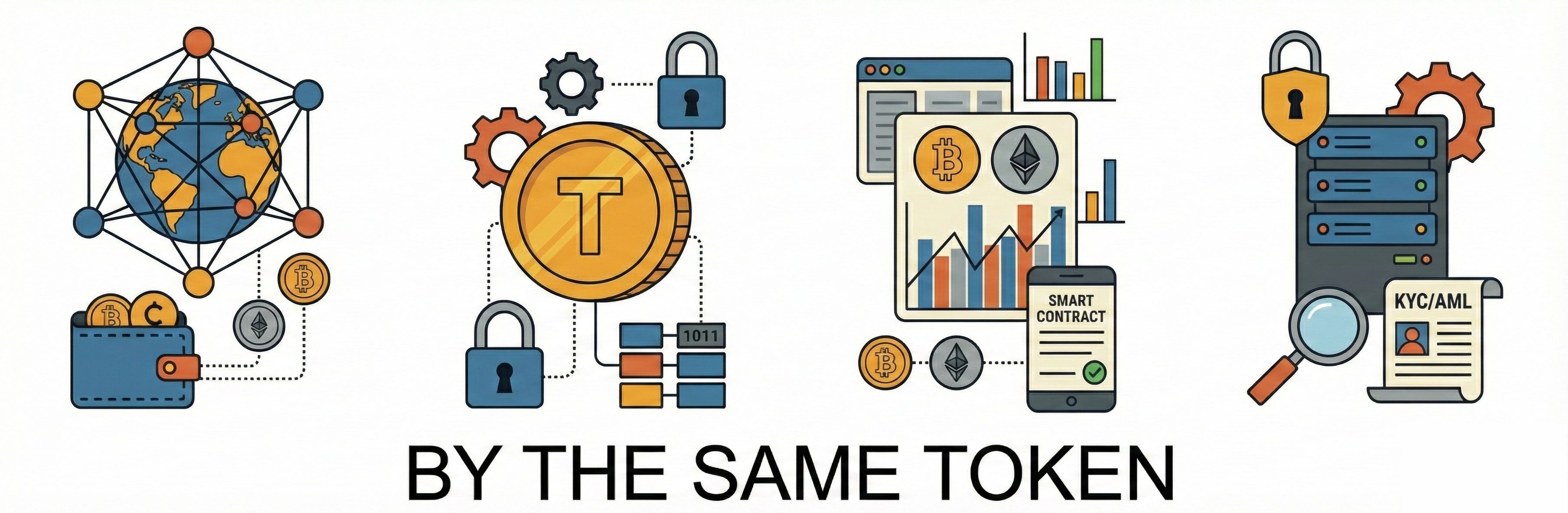
1. The Week’s Throughline
Tokenization’s center of gravity shifted from product narrative to market-structure control. Across securities, payments, commodities, and collateral, the decisive questions are no longer whether assets can be put on-chain, but who has authority to issue them, what cash leg settles them, and which institution maintains the golden record.
2. The Moves That Mattered
- The SEC became the gatekeeper of “real” tokenized equities. Its delayed and narrowed innovation exemption signaled that Washington is not preparing a blanket green light for crypto venues to list stock-like tokens. The key distinction is now issuer-authorized, inventory-backed tokenized securities versus third-party synthetic exposures that may be swaps, unregistered securities, or customer-protection problems.
- BlackRock raised the pressure for a compliant on-ramp. Larry Fink’s call for faster SEC approvals put the largest asset manager behind tokenized stocks and bonds—but importantly, behind a regulated pathway, not a workaround. That aligns with the SEC’s likely bias toward structures with qualified custody, redemption/burn mechanics, transfer-agent integration, and corporate-action fidelity.
- Central banks advanced the missing cash leg. Project Agorá’s prototype showed tokenized commercial bank deposits and tokenized central bank reserves settling cross-border wholesale payments atomically across currencies. That matters because tokenized securities and collateral need institutional-grade money; stablecoins alone are not the end-state for regulated wholesale settlement.
- DTCC moved the securities leg toward public-chain interoperability. Its plan to connect a tokenized securities platform to Stellar by 2027 is not a surrender of post-trade control to a public blockchain. It is a signal that Wall Street’s core infrastructure is exploring shared-ledger distribution while keeping entitlement, lifecycle management, and finality anchored to regulated rails.
- Asset selection broadened beyond Treasuries. Bank of Taiwan’s gold-tokenization pilot showed how RWAs may scale first where an incumbent already controls custody, inventory, and client relationships. Gold is a clean test case: vaulted asset, auditable reserves, bank balance-sheet adjacency, and simpler lifecycle obligations than equities.
3. The Landscape Shift
The biggest change this week: tokenization stopped looking like a venue race and started looking like a control-stack race.
For the last cycle, the question was “which exchange or chain will list tokenized assets?” This week’s developments suggest the more durable question is: which institutions control issuance authority, custody, cash settlement, lifecycle data, and regulatory permissions?
That reframes the competitive map. Crypto venues like Bybit can be powerful distribution and collateral layers, especially for cross-border treasury use cases, but they do not by themselves solve issuer authorization, corporate actions, qualified custody, or final settlement. Public chains like Stellar may become transfer and distribution rails, but DTCC’s involvement implies the official record will remain closely tied to incumbent post-trade infrastructure. Central banks are not being displaced by tokenized money; through Agorá, they are designing the wholesale settlement layer that lets tokenized deposits and regulated assets move without relying on retail stablecoin architecture.
The emerging model is not “everything moves on-chain.” It is regulated assets moving across shared ledgers through controlled wrappers, with incumbent institutions preserving the parts of the stack that confer legal finality. That favors firms with existing custody franchises, balance sheets, regulatory licenses, transfer-agent capabilities, and central-bank connectivity. It disadvantages thin synthetic-token models that offer price exposure without issuer authority or redemption into the underlying asset.
4. Next Week’s Watch
- SEC scope and language. Watch for whether the innovation exemption explicitly distinguishes issuer-sponsored tokenized securities from third-party equity tokens, and whether it requires BD/ATS, transfer-agent, custody, and redemption controls.
- Agorá’s real-money phase. The move from prototype to live-value testing will reveal which banks, currencies, and settlement models central banks are willing to support—and whether tokenized deposits become the default institutional cash leg.
- Incumbent infrastructure partnerships. Track whether more post-trade, custody, and banking players follow DTCC/Stellar and Bank of Taiwan: the next important announcements will be less about chains and more about who controls lifecycle management, reserves, and redemption.
For the full dashboard and real-time updates, visit whatsthelatest.ai.